Heat Resistance in Paper and Plastic Containers: What You Need to Know
Paper food containers and plastic food containers dominate the market for takeout, delivery, and ready-to-eat meals. Understanding the heat resistance of paper food containers and plastic food containers is crucial for ensuring food safety and maintaining container integrity. Not all materials withstand high temperatures equally—using the wrong container with hot liquids or foods can cause leaks, warping, or deformation.
By knowing the thermal limits and performance characteristics of each type, it becomes easier to select containers that keep food secure and maintain their shape under heat.
Paper vs. Plastic: Maximum Temperatures for Safe Use
One of the first considerations when choosing containers is the maximum temperature each material can safely withstand.
| Container Type | Typical Max Temperature | Notes |
| Paper Food Containers | 90–120°C (194–248°F) | Works well for soups, noodles, and hot beverages. Wax or polyethylene coatings improve liquid resistance. |
| PP (Polypropylene) Plastic Containers | 120–135°C (248–275°F) | Common for microwavable meals; maintains shape under heat. |
| PET (Polyethylene Terephthalate) Plastic Containers | 60–70°C (140–158°F) | Suitable for cold or room-temperature meals; not ideal for microwaving. |
| PLA / Compostable Plastic | 50–70°C (122–158°F) | Biodegradable option, but prone to deformation under high heat. |
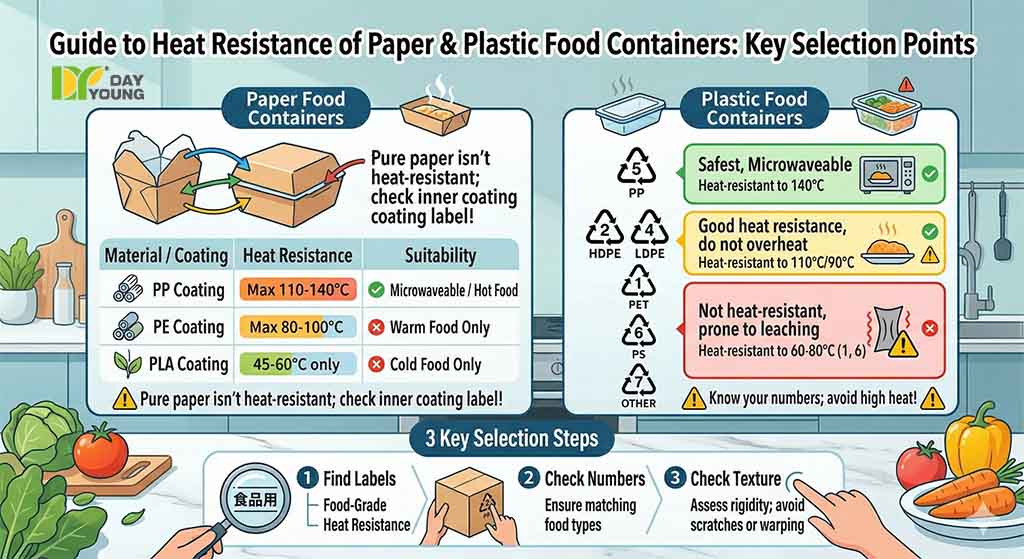
Selecting the right container depends not only on temperature resistance but also on food type and intended heating methods. Using a low-heat-tolerant container with hot liquids can cause leakage, deformation, or even food contamination.
Impact of Microwaving and Hot Liquids
Microwaving food or holding hot liquids introduces additional stress on containers. Even materials with high maximum temperatures can fail if heating is uneven or prolonged.
Paper Food Containers:
- Coated paper containers are generally microwave-safe for brief heating.
- Avoid using containers with non-heat-resistant coatings as they may warp or release harmful substances.
- Lid integrity can be compromised under high heat, potentially leading to spills.
Plastic Food Containers:
- PP containers excel in microwave applications due to high heat tolerance.
- PET and PLA containers are prone to melting or deforming; they should not be used in microwaves.
- Hot oily foods can accelerate deformation in certain plastics.
Practical Tip: Encourage customers to check the container’s material label and maximum safe temperature, particularly when selling to foodservice businesses offering reheating or delivery.
Testing Methods for Heat Durability
Industry-standard testing ensures containers can withstand intended thermal conditions without compromising safety. Common methods include:
- Hot Water Immersion Test – Containers are filled with boiling water for a set period to check for leaks, warping, and lid failures.
- Microwave Simulation Test – Containers are microwaved with food or water to monitor deformation and chemical migration.
- Thermal Cycling Test – Containers undergo repeated heating and cooling cycles to simulate real-life delivery and reheating conditions.
- Oily Food Resistance Test – Evaluates coatings or material integrity when in contact with high-fat foods at elevated temperatures.
Performing these tests ensures paper food containers and plastic food containers maintain shape, safety, and usability, preventing costly product failures and customer complaints.
Choosing Containers That Reduce Leaks and Deformation
When sourcing containers, consider the following factors:
- Material Composition: High-density coatings on paper containers or PP plastics increase resistance to heat and liquids.
- Lid Design: Snap-on lids and interlocking features help reduce spillage.
- Wall Thickness: Thicker walls can improve structural stability under heat.
- Size and Shape: Wide-based containers reduce tipping and heat concentration.
- Supplier Expertise: Working with experienced manufacturers ensures quality control and consistent performance.
By combining the right material with thoughtful design, businesses can minimize leaks, deformation, and customer complaints while ensuring food safety.
Why Day Young Stands Out for Thermal-Resistant Food Containers
Day Young has over decades of experience producing high-quality paper food containers and plastic food containers designed for real-world foodservice challenges. Their containers are rigorously tested for heat resistance, leak prevention, and durability, offering reliable solutions for delivery, takeout, and in-store applications.
With a wide range of coatings, plastics, and sustainable options, Day Young caters to businesses seeking containers that balance performance, safety, and environmental responsibility.
For companies looking to enhance their food packaging reliability, learn more about Day Young’s offerings or contact us to discuss custom solutions.
Share To: